

Biodiversity Conservation
27 November, Steve Pognowski, Marine Spatial Planning, Suva Fiji - Obstacles in conveying the benefits to communities of Marine Spatial Planning and possible solutions formed a key part of third day workshop discussions at the University of South Pacific, Suva, Fiji on Wednesday 27 November.
Speakers gave an overview of issues surrounding data availability, storage, analysis and collation and the challenges involved in accessing and using that information in a simple format. A few participants suggested visual presentations of data, such as posters and animations, were often an effective way of helping coastal communities understand the need for good marine planning.
Some useful examples of the importance of marine spatial planning were discussed, such as the need for protection of vital fisheries from designated areas set out for deep sea and offshore mining or from coastal development.

The afternoon workshop also served as the launch for the Pacific Ocean Ecosystem Analysis (PACIOCEA) programme.
PACIOCEA is a new two-year regional marine programme to diagnose marine management issues and identify coastal resources in the central and west Pacific.
Secretariat of the Pacific Regional Environment Programme (SPREP) and French Marine Protected Areas Agency (AAMP) are the main partners in the new programme, which is funded by the European Commission (BEST-2013).
“A regional approach for spatial planning is interesting because many issues like biodiversity and human activities are not limited to national jurisdiction. It should strengthen cooperation and integrated management,” said François Gauthiez, French Marine Protected Areas Agency.
“The activities under this project will support key priorities under the Oceanscape framework, working towards a balanced marine management approach for sustainable development, management and conservation,” said Tim Carruthers, SPREP Marine and Coastal Advisor.
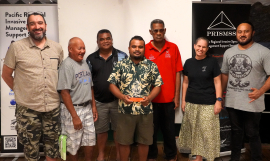
Workshop participants from across the central and west Pacific shared their vision on how PACIOCEA and marine spatial planning in general could improve the effectiveness of Marine Protected Areas and the flow-on ecological, cultural and economic benefits for communities.
Speakers gave an overview of issues surrounding data availability, storage, analysis and collation and the challenges involved in accessing and using that information in a simple format. A few participants suggested visual presentations of data, such as posters and animations, were often an effective way of helping coastal communities understand the need for good marine planning.
Some useful examples of the importance of marine spatial planning were discussed, such as the need for protection of vital fisheries from designated areas set out for deep sea and offshore mining or from coastal development.
The afternoon workshop also served as the launch for the Pacific Ocean Ecosystem Analysis (PACIOCEA) programme.
PACIOCEA is a new two-year regional marine programme to diagnose marine management issues and identify coastal resources in the central and west Pacific.
Secretariat of the Pacific Regional Environment Programme (SPREP) and French Marine Protected Areas Agency (AAMP) are the main partners in the new programme, which is funded by the European Commission (BEST-2013).
“A regional approach for spatial planning is interesting because many issues like biodiversity and human activities are not limited to national jurisdiction. It should strengthen cooperation and integrated management,” said François Gauthiez, French Marine Protected Areas Agency.
“The activities under this project will support key priorities under the Oceanscape framework, working towards a balanced marine management approach for sustainable development, management and conservation,” said Tim Carruthers, SPREP Marine and Coastal Advisor.
Workshop participants from across the central and west Pacific shared their vision on how PACIOCEA and marine spatial planning in general could improve the effectiveness of Marine Protected Areas and the flow-on ecological, cultural and economic benefits for communities.