11 June 2026, Kosrae, Federated States of Micronesia (FSM)- Healthy ecosystems support food security, protect water sources, sustain livelihoods and preserve cultural heritage. For the Pacific, where communities are closely connected to their natural environments, this work goes far beyond conservation alone. In FSM and across the wider region, restoring forests and controlling invasive species is also a critical part of building resilience to climate change and natural disasters.
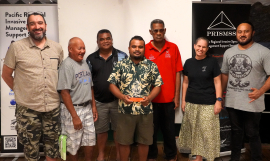
To strengthen conservation efforts across FSM, Invasive Species practitioners from Yap, Chuuk, Pohnpei Kosrae came together in Kosrae for the Resilient Ecosystems, Resilient Communities (RERC) Network Exchange Programme, a three-day learning exchange aimed at strengthening ecosystem restoration and invasive species management across the region.
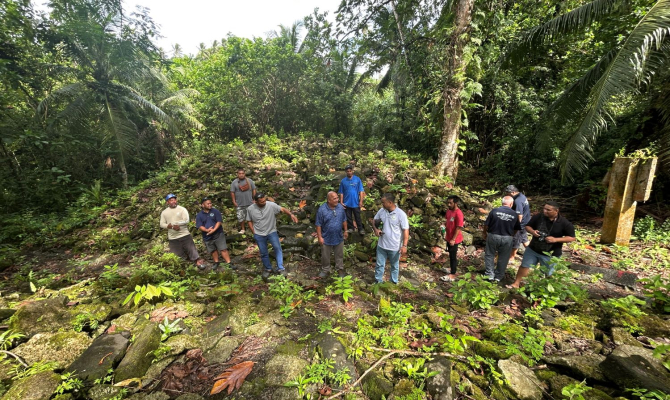
The exchange programme provided a practical platform for participants to learn directly from Kosrae’s ongoing restoration work, particularly at the culturally and ecologically significant Lelu Ruins restoration site. It also enabled rangers attending the programme from other FSM states to identify priority restoration sites in states, discuss management needs and develop appropriate draft action plans.
Led by the Kosrae Island Resource Management Authority (KIRMA), the exchange aimed to share experiences, build skills, and develop coordinated actions through site-led approach to manage multiple invasive species and re-introduce lost native species and ecosystem structure over longer period of time as the last remaining option to restore and maintain such ecosystems.
The Secretariat of the Pacific Regional Environment Programme (SPREP) led RERC programme is one of six programmes of the Pacific Regional Invasive Species Management Support Service (PRISMSS) that focuses on the restoration of high-value ecological sites, community-led ecosystem recovery and building resilience through invasive species management.
While delivering the opening remarks, Mr Steven Palik, Director of the Kosrae Island Resource Management Authority (KIRMA) commented “this exchange provides an important opportunity for our rangers and practitioners to learn from one another, share practical approaches, and explore new ideas in invasive species management and ecosystem restoration.”
“By working together, we strengthen the partnerships and networks that are essential for protecting our islands and we are grateful to SPREP, PRISMSS and all our partners for making this programme possible.
“Initiatives like this create space for collaboration, knowledge sharing and innovation ensuring we are better equipped to safeguard both our ecosystems and communities.”
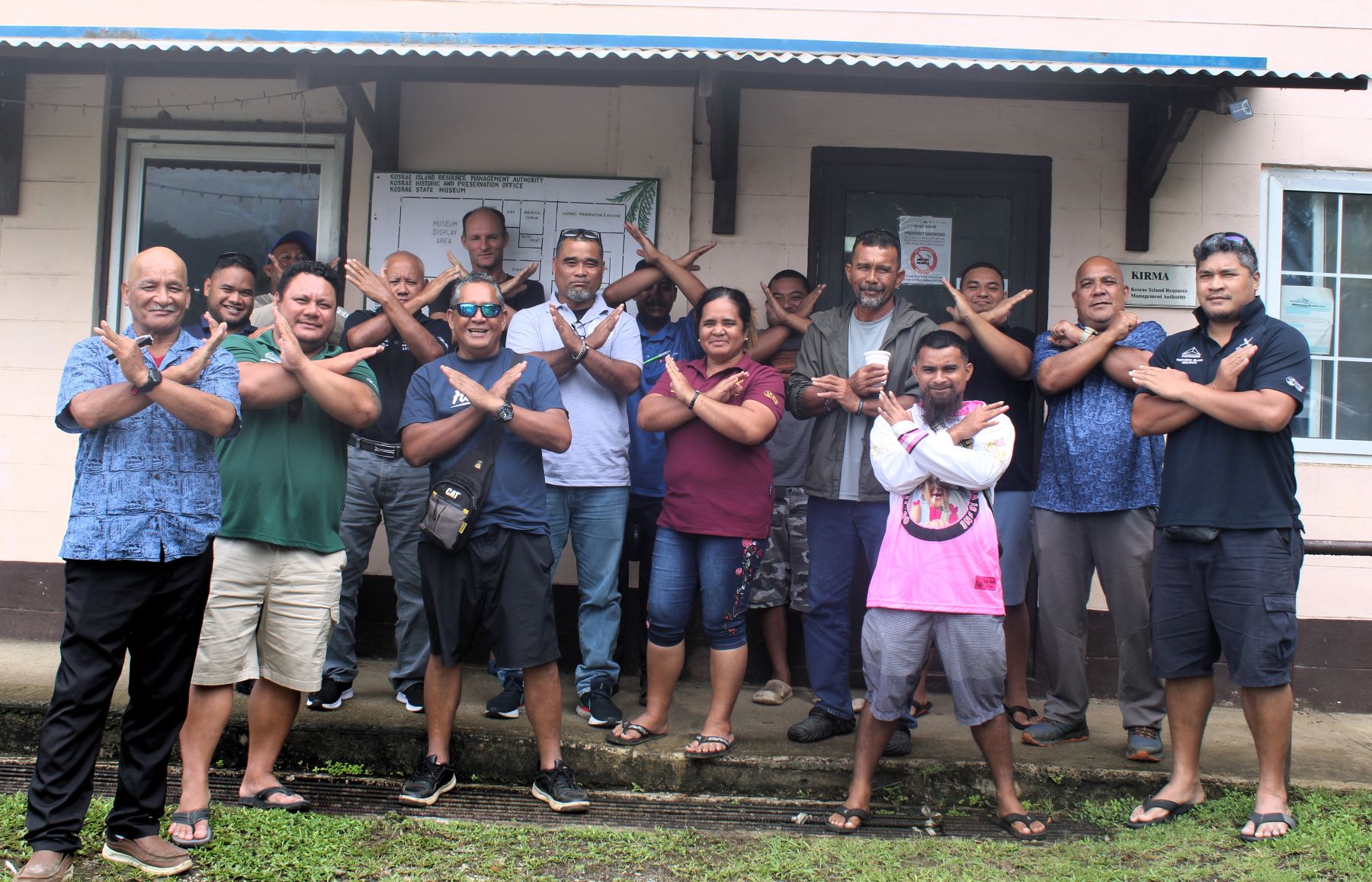
Throughout the programme, rangers explored key themes, including invasive weed management and forest restoration, predator control techniques targeting rats, cats, and pigs, site-based conservation planning and monitoring, community engagement and the cultural importance of restoration sites. Field visits enabled hands-on learning, where rangers observed real-world applications of restoration techniques and invasive species control methods.
SPREP Invasive Species Officer, Mr Josef Pisi commented that, “this RERC Network Exchange Programme demonstrated that when knowledge is shared, capacity is built, and communities are placed at the centre of conservation efforts, meaningful progress can be achieved.”
“Across FSM and the wider Pacific, this growing network of rangers is playing a vital role in safeguarding ecosystems and ensuring more resilient communities.”
The PRISMSS RERC programme plays a critical role in bridging conservation and community resilience by supporting local practitioners especially rangers to restore degraded ecosystems, control invasive species threatening biodiversity, strengthen food security and livelihoods and protect culturally important landscapes.
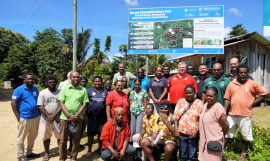
Central to the exchange was the Lelu Ruins restoration site, a place of deep cultural and ecological significance in Kosrae. Through both presentations and field visits, conservation rangers were guided through ongoing work at the site, including invasive weed control, forest restoration techniques and site management strategies.
“Seeing the work on the ground at Lelu really helped connect the theory to what we do back home and it’s something we can adapt to our own islands,” said Mr. Charlie Tommy of Chuuk State, reflecting on how the field experience made the training more meaningful.
“We are not just managing weeds or pests, we are protecting our heritage and our future,” noted Mr. Francis Lyieg, Yap State Invasive Species Coordinator.
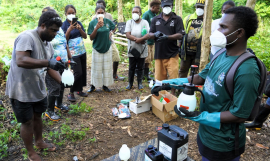
Another key component of the exchange programme was hands-on training in predator management, led by RERC technical partner, BirdLife International, which focused on controlling invasive species such as rats, cats, and pigs that threaten native biodiversity and fragile ecosystems.
Rangers learned how to design bait station grids, install control systems, and effectively monitor and record outcomes. These practical exercises helped build confidence and technical skills, particularly for rangers working in remote environments with limited resources.
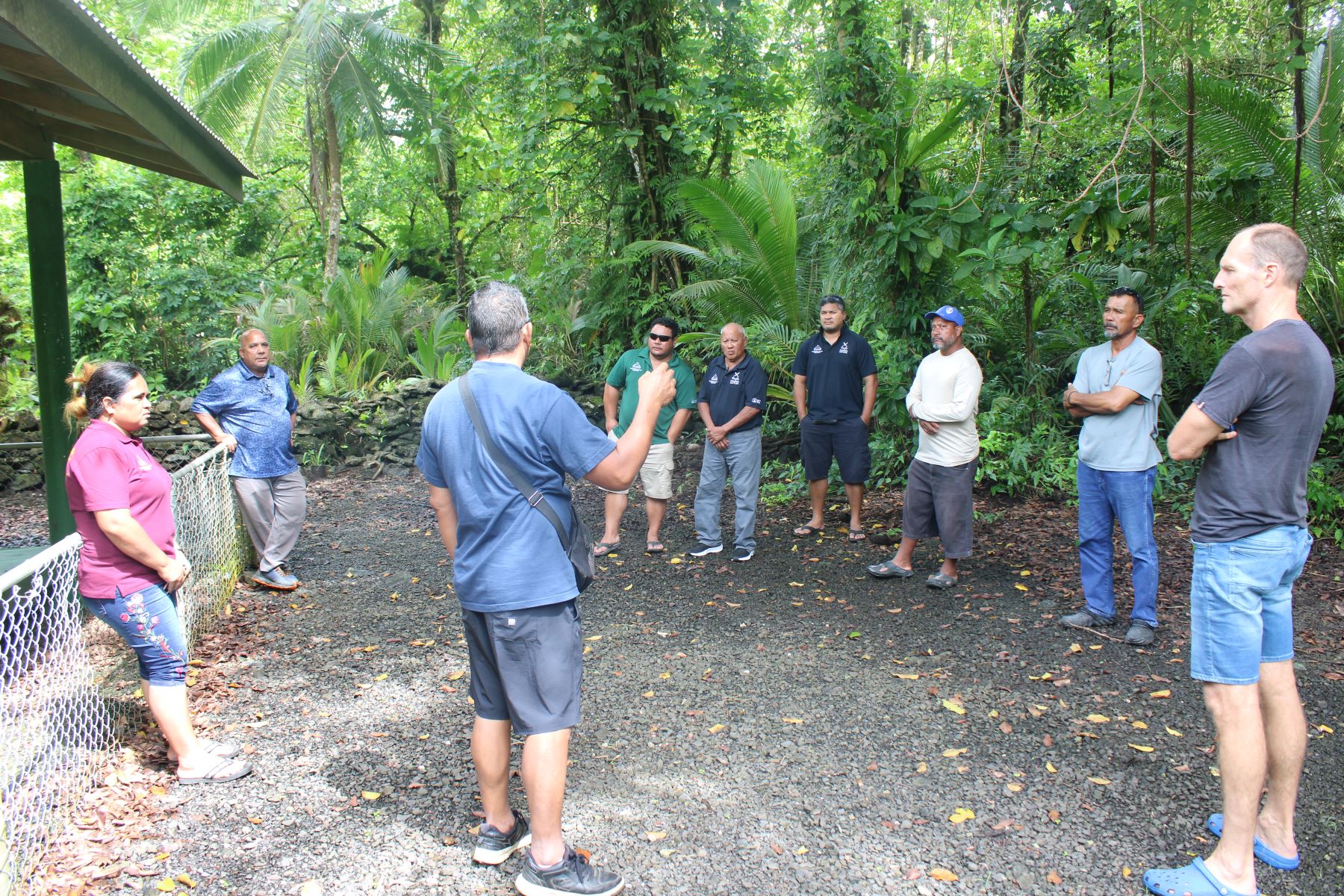
“The hands on training gave me confidence. I now understand how to set up and monitor a rat control programme properly,” shared Community engagement coordinator Mr. Killion Isisaki of Kosrae, highlighting the importance of practical, skills based learning.
Another important outcome of the exchange was the strengthening of networks among rangers in FSM who worked together to identify priority restoration sites in their respective states and began developing site specific action plans that can guide future work.
These plans will feed into regional systems, like the PRISMSS Navigator platform, to help align funding and support with country priorities, ensuring that efforts are both locally driven and regionally coordinated.
“This programme helped us realise we are not working alone. We are part of a network across the Pacific,” reflected Mr. Fredson Ardos of Pohnpei State, emphasising the value of connection and shared learning.
“What we are doing here is about resilience. When we restore our forests, we protect our people,” said Ms. Annie Esau, Kosrae State Invasive Species Coordinator, highlighting the strong link between ecosystem health and community wellbeing.
As the programme concluded, conservation rangers from across FSM left Kosrae with new skills, practical tools and strengthened partnerships, along with a renewed commitment to protecting their islands.
The PRISMSS RERC programme, funded by the New Zealand Ministry of Foreign Affairs and Trade, the United Kingdom International Development and SPREP, has completed rangers’ network and learning exchange programmes in Vanuatu, Solomon Islands and FSM with more planned within the region.
--------------------------------------------------------------------------------------------------------------------------
About PRISMSS: The Pacific Regional Invasive Species Management Support Service (PRISMSS) is a service designed to facilitate the scaling up of operational management of invasive species in the Pacific. PRISMSS brings together experts to provide support within the Pacific region with a focus on protection of indigenous biodiversity and ecosystem function. As a service provider, PRISMSS provides a comprehensive suite of support services in a cohesive, effective, efficient, and accessible manner to Pacific Island countries and territories.
Restoring Island Resilience (RIR): The PRISMSS - Restoring Island Resilience (RIR) is a New Zealand-PRISMSS collaboration project that aims to improve Pacific Island Countries and territories livelihoods and resilience to climate change by reducing the impact of invasive species on natural and agricultural ecosystems through the six PRISMSS programmes.
PRISMSS Powered by: New Zealand Foreign Affairs & Trade, United Kingdom International Development, GEF, United Nations Environment Programme & SPREP.
PRISMSS Partners: Bioeconomy Science Institute NZ, Birdlife International, Earth Sciences New Zealand, New Zealand Department of Conservation, Island Conservation, the Pacific Community and SPREP.
PRISMSS Programmes: Protect Our Islands (POI), Predator Free Pacific (PFP), War on Weeds (WOW), Natural Enemies Natural Solutions (NENS), Resilient Ecosystems Resilient Communities (RERC) and Protect Our Marine Areas (POMA).
For additional information please contact
Mr Dominic Sadler, PRISMSS Manager on dominics@sprep.org or Mr Nitish Narayan, PRISMSS Communications & Liaison Officer on nitishn@sprep.org