

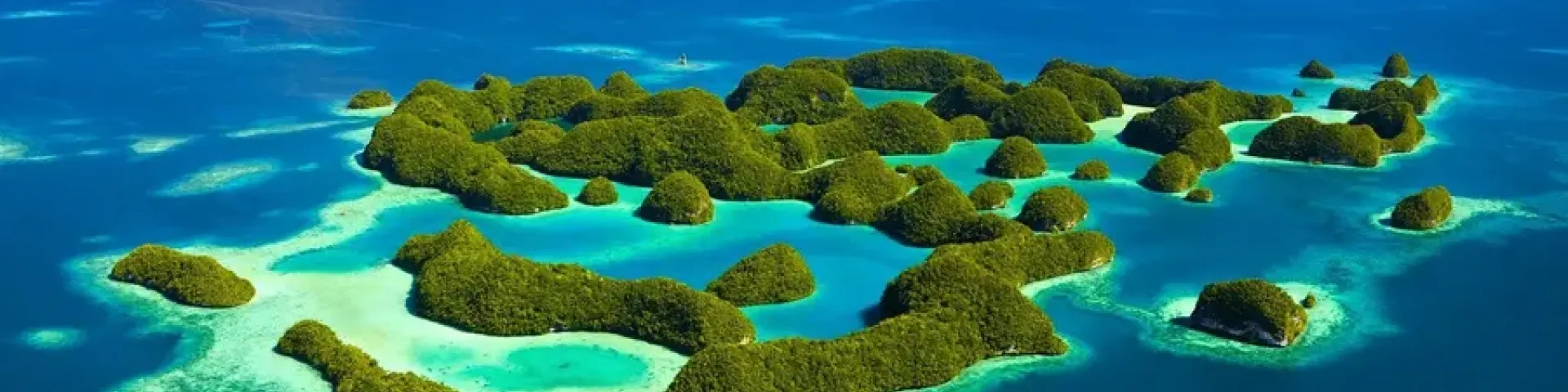

Palau is an archipelago of volcanic and limestone islands in Micronesia, renowned for its pristine marine ecosystems and the UNESCO listed Rock Islands Southern Lagoon. Its ecosystems include tropical forests, mangroves, and coral reefs that sustain fisheries and tourism. Palau has advanced invasive species management through the endorsement of the National Invasive Species Strategy (2021), which emphasizes prevention, rapid response, and restoration, aligned with its biodiversity and climate resilience strategies.
Overview
Biodiversity Status
Palau is globally recognized for its marine biodiversity, including the UNESCO listed Rock Islands Southern Lagoon. Endemic bird species such as the Palau fruit dove highlight the country’s terrestrial biodiversity. Coral reefs and mangroves sustain fisheries, tourism, and coastal protection.
Invasive Species Threats
Rats and feral cats’ prey on native birds and reptiles, reducing populations of endemic species. Invasive plants such as Merremia peltata and African tulip tree threaten forest ecosystems. Agricultural pests, including the coconut rhinoceros beetle, impact coconut palms and livelihoods.
National Strategies & Plans
The National Invasive Species Strategy (2021) provides a comprehensive framework for prevention, eradication, and restoration. Integrated with Palau’s National Biodiversity Strategy and Action Plan (NBSAP), ensuring invasive species management is part of broader biodiversity and climate resilience strategies. Strong emphasis on biosecurity and inter island cooperation to prevent new incursions.

