
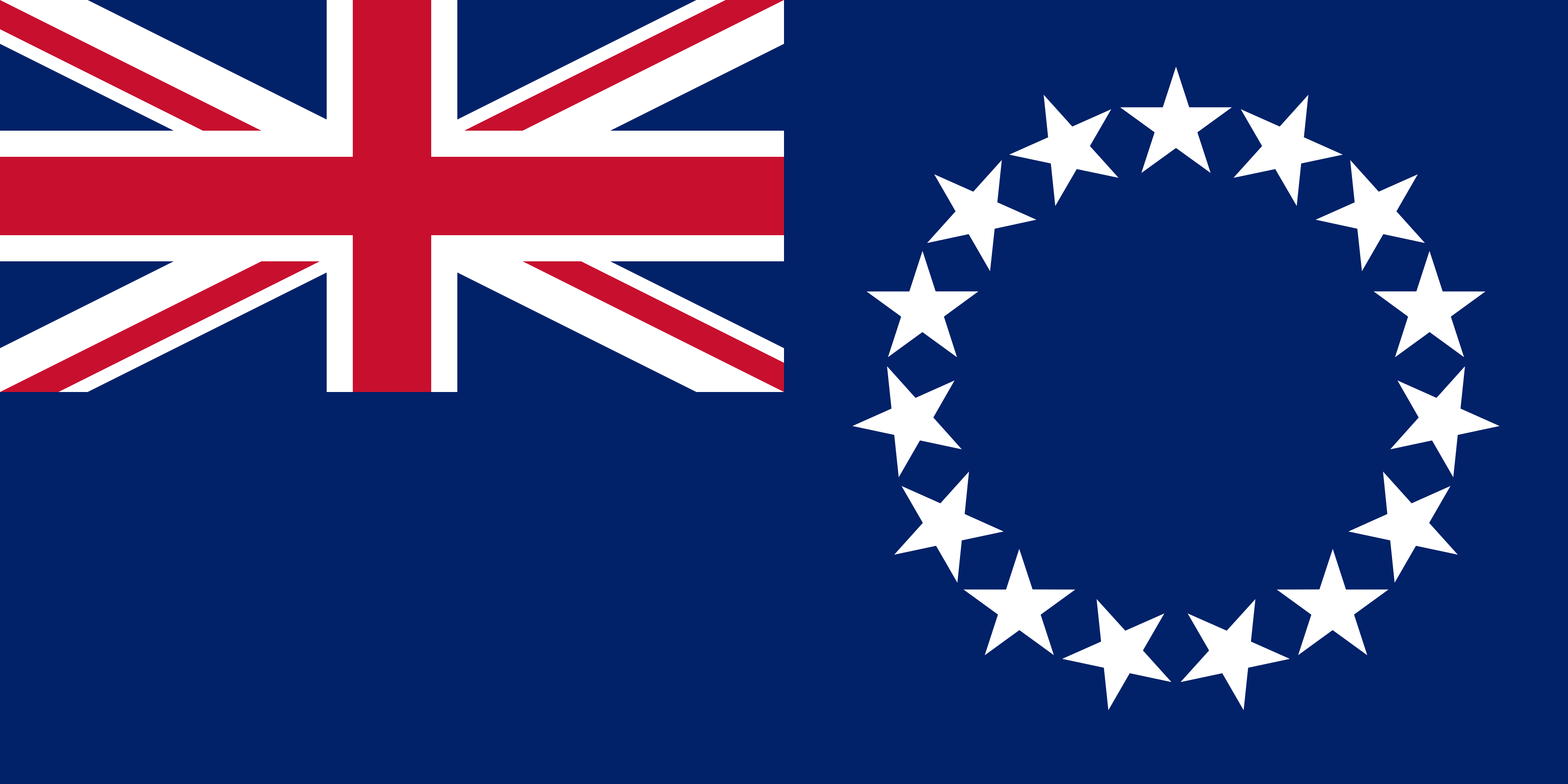
Cooks Flag

Cook Islands are a group of 15 islands spread across a vast ocean area in the South Pacific, divided into volcanic southern islands and low‑lying northern atolls. Rarotonga is the largest and most populated island, while Aitutaki is famous for its lagoon. Its ecosystems include coral reefs, lagoons, volcanic forests, and mangroves, supporting rich marine biodiversity and endemic bird species. In recent years, the Cook Islands have advanced invasive species management through the endorsement of the National Invasive Species Strategy and Action Plan (NISSAP 2019–2025), aligned with their updated biodiversity strategies and strengthened biosecurity measures.

Programmes actifs
POI
PFP
WOW
RERC
    Vue d'ensemble

    Biodiversity

    The islands are home to endemic land birds such as the Rarotonga monarch and unique plant species. Marine biodiversity is globally significant, with reefs and lagoons sustaining fisheries and tourism. Protected areas exist but remain limited in coverage, leaving many ecosystems vulnerable.

    Invasive Species Threats

    Rats and feral cats’ prey on native birds and reptiles. Invasive plants such as Mikania micrantha and Merremia peltata overgrow agricultural and forest areas. Coconut rhinoceros beetle poses a serious threat to coconut palms, a key livelihood resource.

    National Strategies & Plans

    The NISSAP 2019–2025 provides a national framework for prevention, eradication, and control. Integrated with the Cook Islands’ National Biodiversity Strategy and Action Plan (NBSAP) ensuring alignment with biodiversity conservation     priorities. Biosecurity partnerships with regional agencies strengthen capacity to detect and respond to new incursions.


    Quick Facts

    Région
    Polynesia - Pacific (Oceania)
    Capitale
    Avarua
    Population
    17,300 (2025)
    Superficie totale
    240km² (spread over 15 islands)
    Programmes

    Protect our Islands (POI)

    Protect our Islands (POI)
    After an invasive species arrives in a new place, it needs to survive and reproduce, establish a population, and spread, before impacts are noticed. By the time impacts are obvious, the control or eradication of invasive species can be difficult and expensive or sometimes impossible. The purpose of this programme is to prevent or detect the arrival of invasive species and stop their establishment, spread and impacts.

    Predator Free Pacific (PFP)

    PFP
    Biodiversity is the foundation of all healthy ecosystems but, on many Pacific islands, invasive species are destroying native plants and animals, causing entire ecosystems to collapse. Removing invasive predators such as rats is a nature-based solution that can help to restore the resilience of island ecosystems by supporting the return of seabird populations and the vital nutrients they provide for forest systems and coral reefs. We know that on islands without rats the coral reef systems can provide up to 50% more fish for local communities. Island Conservation, the lead for the Predator Free Pacific programme, is supported by key PRISMSS partners including BirdLife International and the New Zealand Department of Conservation. Together these organizations have now eradicated invasive predators from over 60 Pacific islands. The growing success of the Predator Free Pacific programme is based on combining global eradication expertise with local knowledge and efforts to build greater community awareness and ownership of the ongoing benefits of restoring the resilience of island ecosystems.

    War on Weeds (WOW)

    WOW
    Some invasive plants have the ability to transform (damage or destroy) ecosystem function. Weeds outcompete more desirable plant species and disrupt processes such as water flow, fire regimes, soil quality, nutrient cycling and regeneration. Weeds can also be harmful to human and animal health. Weeds thrive on disturbance and so their harmful impacts are exacerbated by tropical cyclones, strong winds, drought and fires, all of which are increasing in severity due to the changing climate. Whilst there are several existing weed management programmes across the Pacific, capacity overall is very limited. This programme is focused on the management of high risk, low distribution weed species, where the objective is eradication or containment.

    Resilient Ecosystems-Resilient Communities (RERC)

    RERC
    Pacific threatened species and ecosystems often exist within high value areas on larger islands where invasive animals and invasive plants will continue to be a threat. A site-led approach to manage multiple invasive species and re-introduce lost native species and ecosystem structure over a longer period of time is the last remaining option to restore and maintain these ecosystems. Communities directly benefit from resilient ecosystems and are an essential part of ecological restoration. Many priority area ecosystems have been restored over the past 3 decades, mostly in New Zealand. The Pacific has had several pilot sites which have had very successful outcomes with increases in threatened endemic birds.
    Articles/Mises à jour

    PRISMSS Propulsé par

    Partenaires PRISMSS

