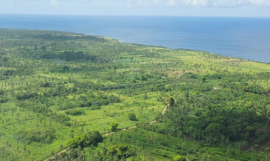


28 June 2022, Matautu - In 2021, the Territorial Environment Service (STE), supported remotely by Island Conservation, successfully carried out rat removal operations on four islets of Wallis (Fenuafo'ou, Nukuhifala, Nukutapu, Nukuteatea) under the European Union funded PROTEGE project.
Considering the limitations in terms of support due to COVID-19 travel restrictions, the work carried out by STE was recognised through the awarding of SPREP’s "Battler of the Year" 2021 Award.
In line with the Wallis biosecurity strategy, the islands are monitored every six months to check that no rats have been reintroduced.

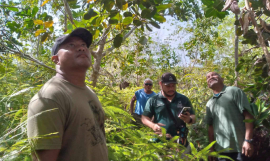
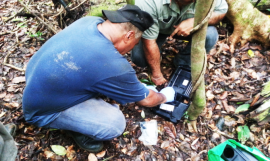
As part of this, a monitoring campaign was carried out by STE from 2 to 6 May in Fenuafo'ou and Nukuhifala and from 30 May to 3 June in Nukuteatea and Nukutapu using a line of 20 kamate traps and cameras with bait.
No rats were caught or observed during these monitoring campaigns.
The expected results of these operations are a revitalisation of the forests, an increase in the populations of marine and terrestrial birds, as well as the improvement of sanitary conditions on the islets.
Feedback from owners and boaters confirm these positive results on the target islets, where better harvests of fruit and coconut trees have been reported (Nukuteatea Association) and sanitary conditions have improved (Nukutapu boaters).
The Territorial Environment Service has obtained approval from the customary authorities to continue rat removal operations on the 12 remaining islets.