

Biodiversity Conservation
New biodiversity discoveries have been made on Nauru following a survey of marine and land species on the island nation, by a team of 12 global experts.
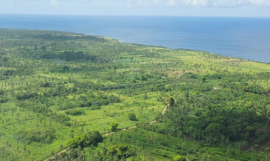
With a land area of just under 22 square kilometres, Nauru is well known for its phosphate extraction that has seen two-thirds of the land mined. This large scale industrial disruption has caused significant loss of land species and, undoubtedly, would have contributed to the introduction of many exotic invasive species.
"These findings strongly indicate that ecosystem restoration efforts are well and truly justified and provide hope for the future," said Bruce Jefferies, the Terrestrial Ecosystems Management Officer of the Secretariat of the Pacific Regional Environment Programme (SPREP).
Mr Jefferies coordinated the team conducting the Biodiversity Rapid Assessment on Niue in partnership with the Government of Nauru.
"56 native species of flora were discovered along with 125 introduced species. None of the recorded species are, however, endemic to Nauru," he said.
"Extensive phosphate mining has impacted on Nauru's flora and fauna and we are particularly pleased with the findings from the marine component of the survey where, for example, reef fish data, which was gathered from 19 different dive sites, recorded 280 new species, as well as 31 new family records of reef fish for Nauru."

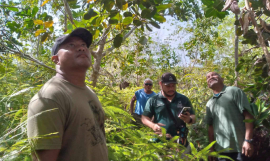
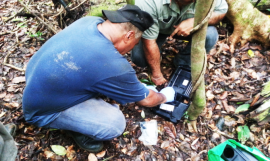
The Biodiversity Rapid Assessment took place in June over a 10 day period. The team was assembled and coordinated by SPREP in collaboration with the Government of Nauru and Conservation International. Scientists from the United States, Hawaii, Samoa, New Zealand and Australia surveyed birds, lizards, insects, plants, corals and fish as well as the general state of the environment.
A similar survey took place in the Savaii uplands of Samoa in 2013 for which the report is now available.
The final report of the BIORAP survey on Nauru will be available on the SPREP website by the end of 2013.
Findings include 280 new records for Nauru of coral reef fish; a previously unrecorded skink, which is undergoing genetic investigations to determine if it is a new species to science; and, of the 36 bird species that were recorded, two are new records for Nauru.
With a land area of just under 22 square kilometres, Nauru is well known for its phosphate extraction that has seen two-thirds of the land mined. This large scale industrial disruption has caused significant loss of land species and, undoubtedly, would have contributed to the introduction of many exotic invasive species.
"These findings strongly indicate that ecosystem restoration efforts are well and truly justified and provide hope for the future," said Bruce Jefferies, the Terrestrial Ecosystems Management Officer of the Secretariat of the Pacific Regional Environment Programme (SPREP).
Mr Jefferies coordinated the team conducting the Biodiversity Rapid Assessment on Niue in partnership with the Government of Nauru.
"56 native species of flora were discovered along with 125 introduced species. None of the recorded species are, however, endemic to Nauru," he said.
"Extensive phosphate mining has impacted on Nauru's flora and fauna and we are particularly pleased with the findings from the marine component of the survey where, for example, reef fish data, which was gathered from 19 different dive sites, recorded 280 new species, as well as 31 new family records of reef fish for Nauru."
The Biodiversity Rapid Assessment took place in June over a 10 day period. The team was assembled and coordinated by SPREP in collaboration with the Government of Nauru and Conservation International. Scientists from the United States, Hawaii, Samoa, New Zealand and Australia surveyed birds, lizards, insects, plants, corals and fish as well as the general state of the environment.
A similar survey took place in the Savaii uplands of Samoa in 2013 for which the report is now available.
The final report of the BIORAP survey on Nauru will be available on the SPREP website by the end of 2013.